
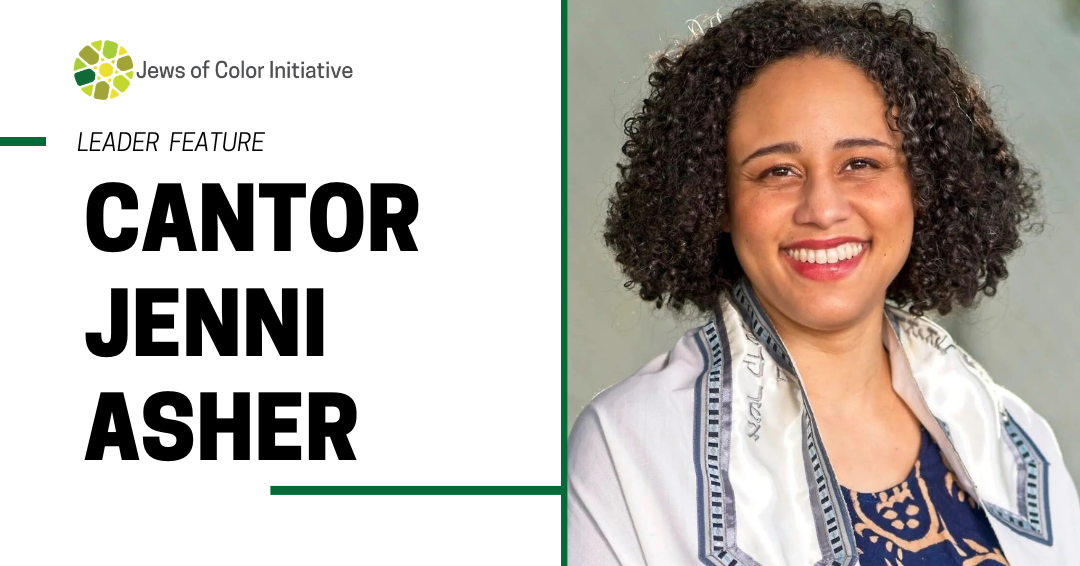
Standing in front of a congregation is both an art and a responsibility. For Cantor Jenni Asher, cantor at HAMAKOM in Los Angeles, that experience captures the power and possibility of clergy leadership today. “Standing up in front of a thousand people, singing and guiding… it’s a powerful place to be,” she says.
Across the Jewish community, clergy are being called to meet a moment that demands more than tradition alone. They are facilitators of meaning, stewards of community, and leaders through complexity, accompanying individuals and families through life’s most significant moments while helping shape the collective experience of Jewish life. As Asher reflects, “Being a clergy person is so much of leading people through all of the challenges of their lives… showing up for their life cycles.”
At a time when many Jewish communities are grappling with how to foster deeper engagement and participation, Asher sees an opportunity to reimagine not just what happens in communal spaces, but how it feels to be part of them. For her, leadership is rooted in creating moments of connection—where music, ritual, and presence come together to make Jewish life felt as much as it is practiced.
Judaism is a tradition that values multiplicity, both in our communal diversity and in a longstanding culture of questioning, interpretation, and dialogue that stretches across generations. That ethos continues to shape how leaders understand their role as guides within a dynamic tradition. “I discovered how brilliantly open Judaism is to contradiction, and people disagreeing, and that being seen as a wonderful, lovely, encouraged thing in our community,” Asher shared. Judaism’s openness to contradictions and dialogue shapes the spiritual experience she seeks to cultivate, one where individuals feel invited into meaning-making rather than positioned as passive attendants.
Asher’s path into clergy reflects that same fervor for curiosity and intentionality. While working as a professional musician supporting Jewish communal spaces, she found herself drawn not only to the music, but to the meaning behind it. After converting, her curiosity deepened, and so did her desire to understand the tradition more fully. “I couldn’t seem to get enough answers, so I went to cantorial school… I just wanted to understand more.”
Leadership does not develop in isolation; it is cultivated through environments that recognize potential, invite participation, and create space for growth. Asher’s first foray into the pulpit came as a substitute for a cantor on leave—an opportunity that quickly became something more. “When I started, I just figured… okay, I’ll be the most amazing sub ever… It wasn’t a thought that I would actually be the cantor… and then I fell in love with the job.”
Today, Cantor Asher has a compelling vision for Jewish communal life in which music plays a central role in fostering connection and belonging.
Asher sees music as one of the most powerful—and underutilized—tools for spiritual engagement in Jewish life. For her, music is not simply an accompaniment to prayer; it is a primary way people access meaning, emotion, and connection.
At a time when many communities are experiencing dwindling attendance and lower patterns of participation, she is focused on how music can transform the synagogue experience from something people attend into something they feel part of.
“Wouldn’t it be amazing if we could show up to Shabbat and be surprised by our spiritual musical experiences?” she asks with excitement.
That sense of surprise, discovery, and emotional resonance is central to her vision. Rather than approaching services as fixed or predictable, Asher imagines spaces that are dynamic, participatory, and responsive, where music invites people into deeper presence and connection with one another. In this model, engagement is not something added on to Jewish life—it is built into the experience itself.
In doing so, she creates entry points into Jewish life that are intuitive, embodied, and accessible, meeting people where they are and inviting them into deeper belonging.
For the Jews of Color Initiative, leaders like Asher represent what becomes possible when communities invest in leadership that reflects both the diversity and the evolving needs of Jewish life. Expanding who serves as clergy is not only a matter of representation, but a strategy for strengthening the entire Jewish communal ecosystem. Leaders who bring a range of lived experiences are well equipped to foster belonging, navigate complexity, and imagine creative pathways forward. JoCI is a proud connector of Jews of Color clergy and clergy-to-be, facilitating a network and online space where multiracial spiritual leaders can connect, share resources, and support one another.
Across the country, a new generation of leaders is emerging—bringing creativity, depth, and vision to their roles, and helping communities reimagine what Jewish life can be. Their leadership is not an exception; it is a reflection of the multiracial, multifaceted reality of the Jewish people.
By reimagining how music functions within Jewish life, Cantor Asher is helping to shape communities that are not only more inclusive, but more connected, more responsive, and more alive. As JoC clergy step forward, they are not only guiding communities through the present—they are shaping the future. Expanding the sound and shape of Jewish leadership opens the door to new forms of connection, new expressions of tradition, and a more vibrant and inclusive communal life.
