
Can a more expansive understanding of Jewish diversity reduce anti-Jewish hate? For the Shalom Curriculum Project (SCP), that question is at the center of a new effort to address antisemitism in U.S. public high schools. Through its Perceived Variability Pilot Study on Antisemitism in American High Schools, SCP is exploring whether teaching students about the diversity of Jews can reduce bias before it takes root.
Part of JoCI’s cohort of grantees Addressing Antisemitism Through a JoC Lens and housed at the University of Wisconsin–Madison, the project is testing if exposure to racial and ethnic diversity can help counter some of the stereotypes and assumptions that fuel antisemitism. SCP is also partnering with the Multicultural Student Achievement Network, a national network of school districts working to eliminate racial disparities in schools. By centering the presence and experiences of Jews of Color, the study offers a proactive intervention that aims to reshape how young people view Jewish life.
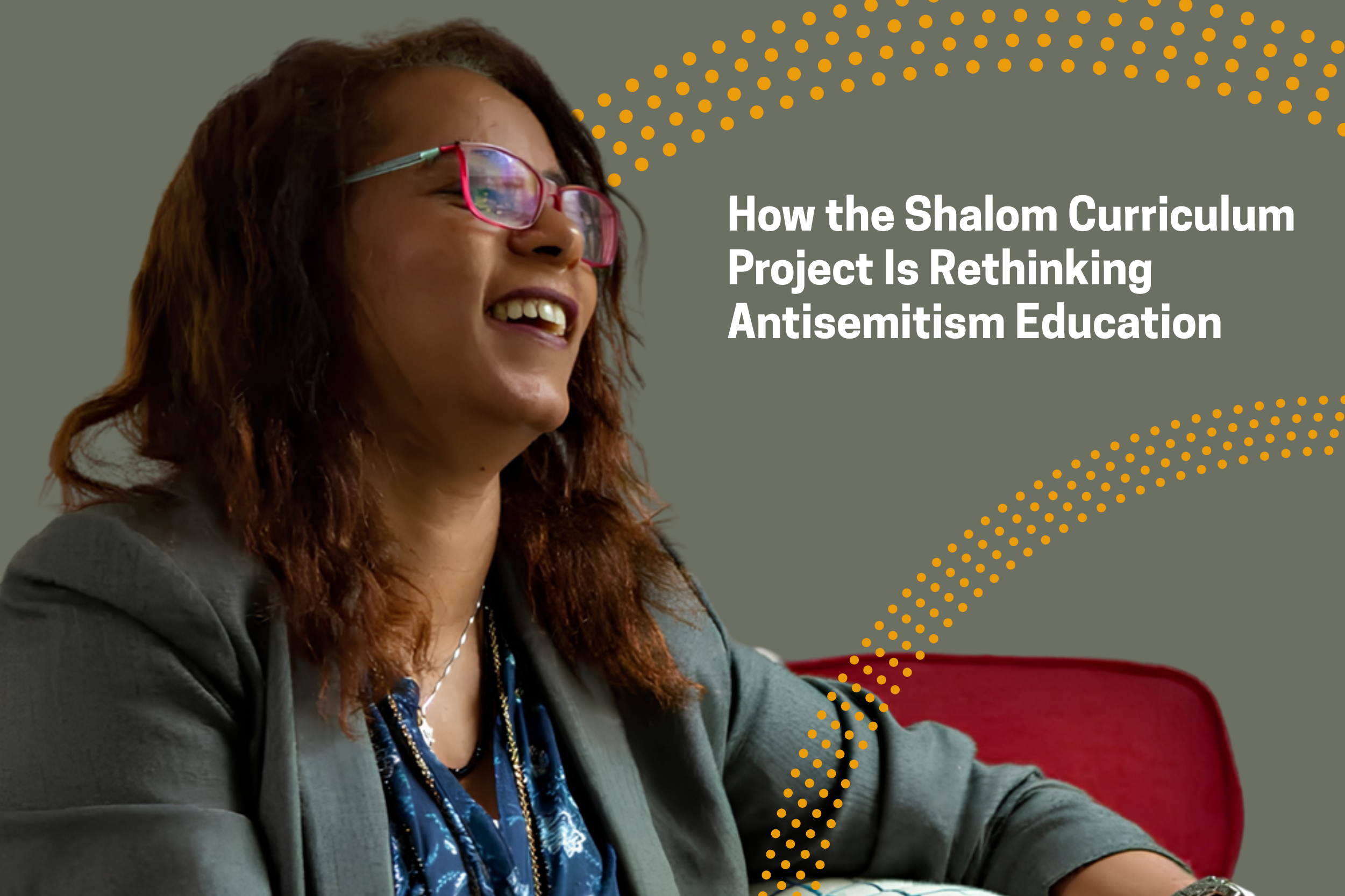
Michal Avera Samuel, leader of the Shalom Curriculum Project, explains that the idea emerged from reviewing existing research and hearing an urgent community need.
“We started getting requests from school districts about how to address antisemitism and Jewish hate in public high schools,” she shared. “So we decided to pilot a study and see if highlighting diversity in the Jewish community can reduce hate among students.”
The SCP team drew inspiration from prior research on Islamophobia, which found that highlighting diversity within Muslim communities could reduce prejudice. “We learned by reading a research study about Islamophobia that recorded reduced hate when they highlighted the Muslim community’s diversity. We are taking this study and applying this concept to the Jewish community,” Samuel said.
Working with public high schoolers, the team designed focus groups that invite students into conversation rather than simply delivering information.
“We created a poster—an image that reflects the diverse Jewish community,” Samuel explained. It shows students “of high school age playing sports, dancing, participating in different activities.”
Upon sharing this visual with high school students in their focus groups, facilitators engage students in conversation about identity, assumptions, and what diversity in the Jewish community means.
“This triggers a larger conversation on the idea that Jews have so much variety of cultures. It reminds students that you can’t just look at people and instantly know who is Jewish and who is not,” she said.
For JoCI, this approach reflects a critical shift in how antisemitism is addressed. Too often, public conversations about Jewish identity rely on narrow assumptions—often defaulting to white, Ashkenazi experiences while leaving little room for the full racial and ethnic diversity of Jewish life. When those assumptions go unchallenged, they shape how antisemitism is understood and who is seen as belonging.
By helping students encounter Jewish diversity as teens, SCP is working to interrupt those assumptions before they calcify.
“My vision is to create those tools to have discussions with high schoolers so when they get to universities or jobs they already know, and are not surprised to see, that there is diversity in the Jewish community,” she said. “This is the way they can become allies with the Jewish community—to know that we are more than one color or more than what is on social media or the news.”
This work is especially urgent in a post-October 7th environment, where conversations around antisemitism have become both more necessary and more difficult. Building trust with schools, students, and communities required patience and care.
“One of the challenges we had after October 7th was how to engage the community to be willing to be part of this research and to create these focus groups,” Samuel reflected. “It took us a long time to build the trust and to engage the community because of the tensions affecting everyone.”
Meaningful work around antisemitism cannot happen without relationships, trust, and a willingness to stay in difficult conversations. It also highlights why JoCI’s Addressing Antisemitism Through a JoC Lens cohort of grantees matters—not only as a funding mechanism, but as a community of practice.
For Samuel, being part of the cohort offered something powerful: a space where shared understanding did not have to be explained.
“The cohort is amazing. We are a group of researchers, nonprofit professionals, and leaders who are really dealing with antisemitism in our personal and professional lives, and fighting and addressing hate and dealing with racism,” she said. “The togetherness of the cohort helps us to support each other and learn from each other. To know we are not alone in this struggle.”
Samuel also emphasized the importance of JoCI’s leadership in creating that environment. “The staff at JoCI is always there for us and supports us with a unique understanding of the challenges. It is a really amazing experience for a grantee to be in this cohort.”
Samuel sees enormous potential for the study’s future reach. “It’s a pilot study and there is a lot of potential to expand it,” she said. She believes the project could help reshape how antisemitism education happens nationally, building practical tools for schools that foster deeper understanding and reduce harm.
“There is a lot of research on antisemitism,” she said, “but I believe this new approach could be one of the biggest ways to continue and expand what we know about antisemitism.”
At its core, the work is about visibility: helping young people see diverse Jewish life more clearly, and helping Jewish communities be understood more fully. It is also about possibility—the belief that education can create more thoughtful relationships, reduce fear, and make room for a more accurate and inclusive understanding of who Jews are.
In that vision, representation can be transformative. By starting in high schools, SCP is helping ensure that the next generation enters Jewish and public life with a wider lens, stronger understanding, and fewer assumptions.
