
When most people think about antisemitism education, they imagine a workshop, a panel discussion, or a training session. Sophia Morgan of Correlate envisioned something remarkably different: some of the most meaningful conversations about antisemitism could actually happen with a small group of friends sitting in a circle, a deck of cards in hand.
That idea led to Between Us, a new bridge-building card game designed to shift how people engage in conversations about antisemitism and racism, rooted in relationship and personal stories.
Designed for approximately 2-6 players, the game includes cards that prompt discussion across identities, antisemitism, race and racism, solidarity, and belonging, alongside embodied practices and reflection points about the experience of participating in the game itself. Morgan explains that these are “designed to really help us focus on relational engagement.”
Rather than centering debate or a need to persuade opposing viewpoints, the card game is intentionally structured to move participants toward presence, reflection, and shared humanity. “The game invites conversation, understanding, and empathy instead of intellectual debate, polarization, or approaches that might be more distancing,” Morgan said. In doing so, it offers an innovative new tool for antisemitism education rooted in the belief that durable understanding is built not only through information, but through connection that can hold complexity without collapsing it into the common pitfalls of defensiveness and polarization.
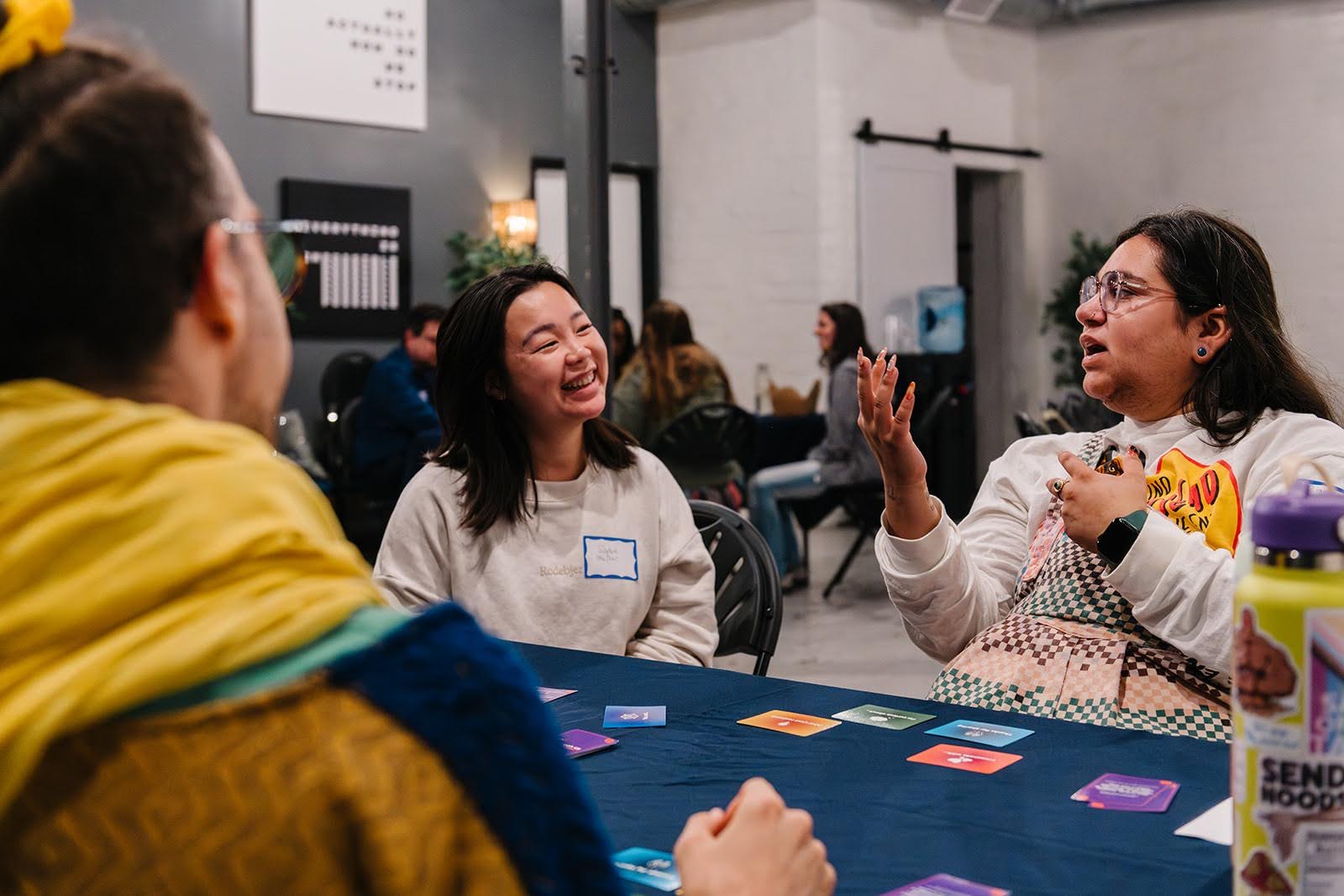
At a time when conversations about antisemitism and racism are often shaped by polarization, this relational approach is a deliberate intervention. It reframes disagreement not as failure, but as material to be held and explored together. “We’re more similar than we’re different, and we need each other as well. We need to hold onto our shared humanity,” Morgan says.
Between Us is not only a tool for dialogue; it is a reorientation of what dialogue is expected to do. It does not aim to resolve complexity, but to make space for it—without flattening difference or rushing toward agreement. “This is a game of exposing nuance and complexity” about conversations that are typically treated as black-and-white, Morgan explains.
A JoC participant from the Fall 2025 Between Us Los Angeles Cohort shares, “I was given a chance to express things that have been weighing on my heart given the political climate. I feel like this game encourages real, meaningful dialogue with people who otherwise wouldn’t speak to one another.”
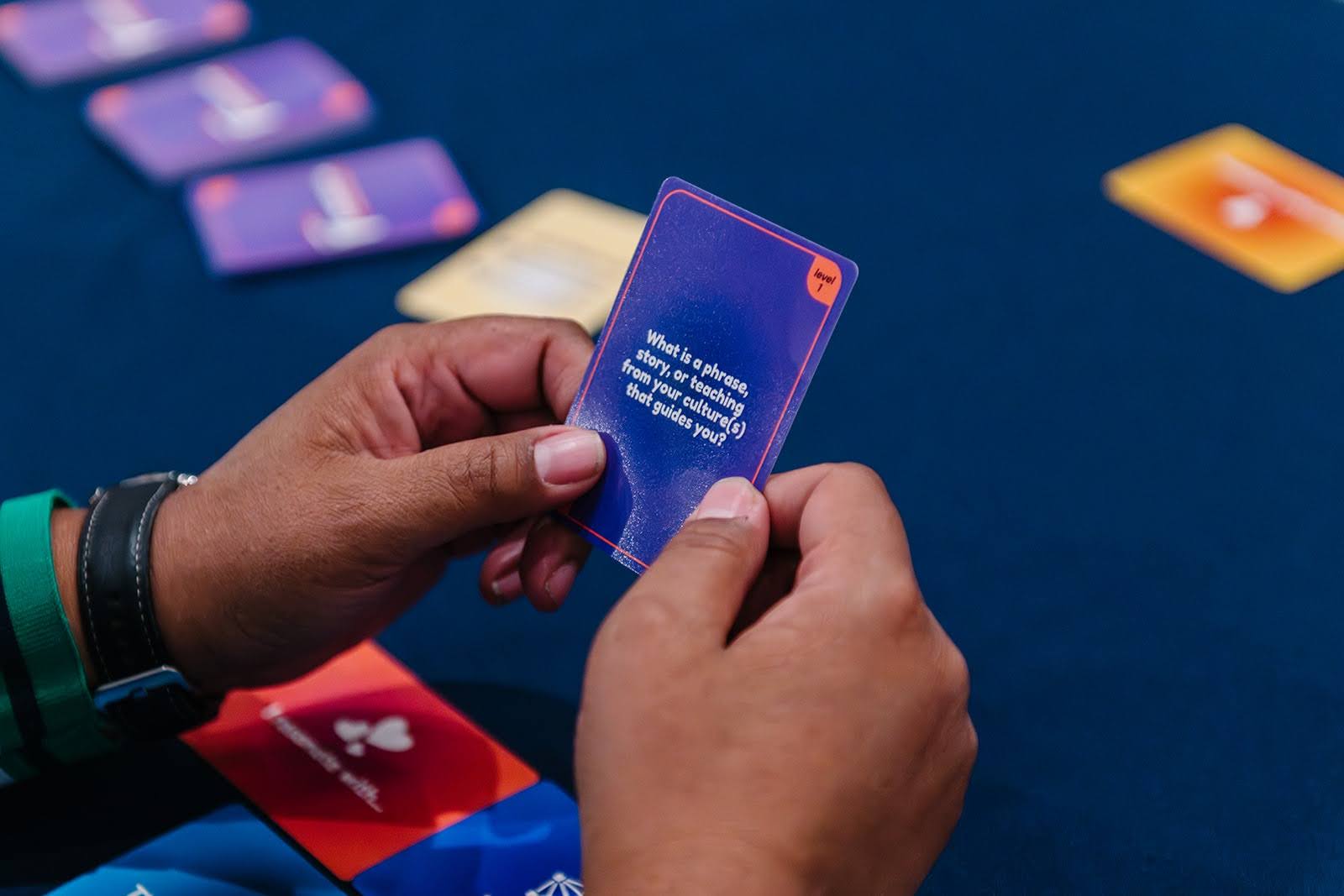
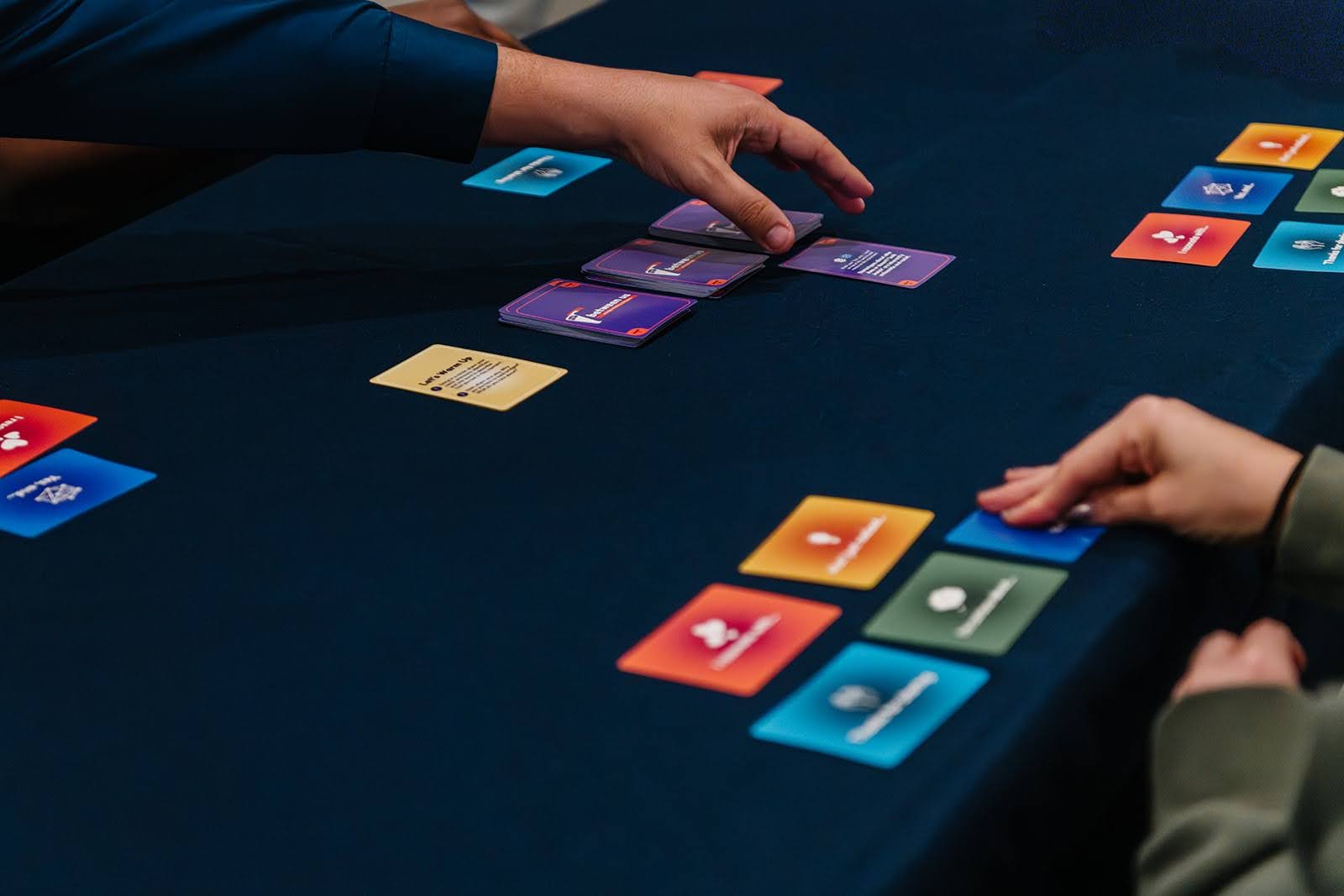
Morgan and the Between Us team envision the game being used in synagogues, JCCs, Hillels, schools, community spaces, and among both Jewish and non-Jewish family and friends as a shared resource for learning in relationship. “Bring the game and play it with your friends and family,” she suggests. “My personal favorite experiences [of the game] have been doing just that, where I got to really deepen understanding with friends of over 10 years, and family members with whom I’ve never had these conversations.”
This project is part of a JoCI’s cohort of grantees Addressing Antisemitism Through a JoC Lens. Supported by the network of leaders in the cohort, Morgan has initiated some powerful cross-community collaborations such as an Asian Jewish edition in partnership with The LUNAR Collective, and with other JoC-led organizations from the cohort, like Jewtina y Co. “There are just so many different cross-pollinations in the cohort because we’re doing this work together and we can really uplift each other.”
Between Us has a central lesson to teach us about addressing antisemitism: the future of antisemitism education may depend less on what we tell people and more on what we are willing to navigate with each other—and how.
We invite you to learn more and get a copy of the game and bring these bridge-building conversations into your community! Between Us is available for online ordering (coupon code: SOLIDARITY). If you would like to partner with Correlate (hosting a game night, facilitating a live bridge-building workshop incorporating Between Us, or creating a custom version (e.g. Asian Jewish bridge-building), please reach out to Sophia Morgan at he***@***********te.org. Follow along for updates @_correlate and on Correlate’s website.
Special thanks to: Jenni Rudolph (Between Us designer, Co-Founder & Co-Executive Director of The LUNAR Collective), Nancy Contreras (Correlate JOC Program Operations Manager), and Los Angeles JOC community for making Between Us possible.
