
When Ammud: The Jews of Color Torah Academy began, it had fewer than a dozen members. Today, the organization has a nationwide community of more than 920 Jews of Color, with programming and partnerships reaching across cities including New York, Los Angeles, Denver, Boulder, Boston, Chicago, and Washington, D.C.
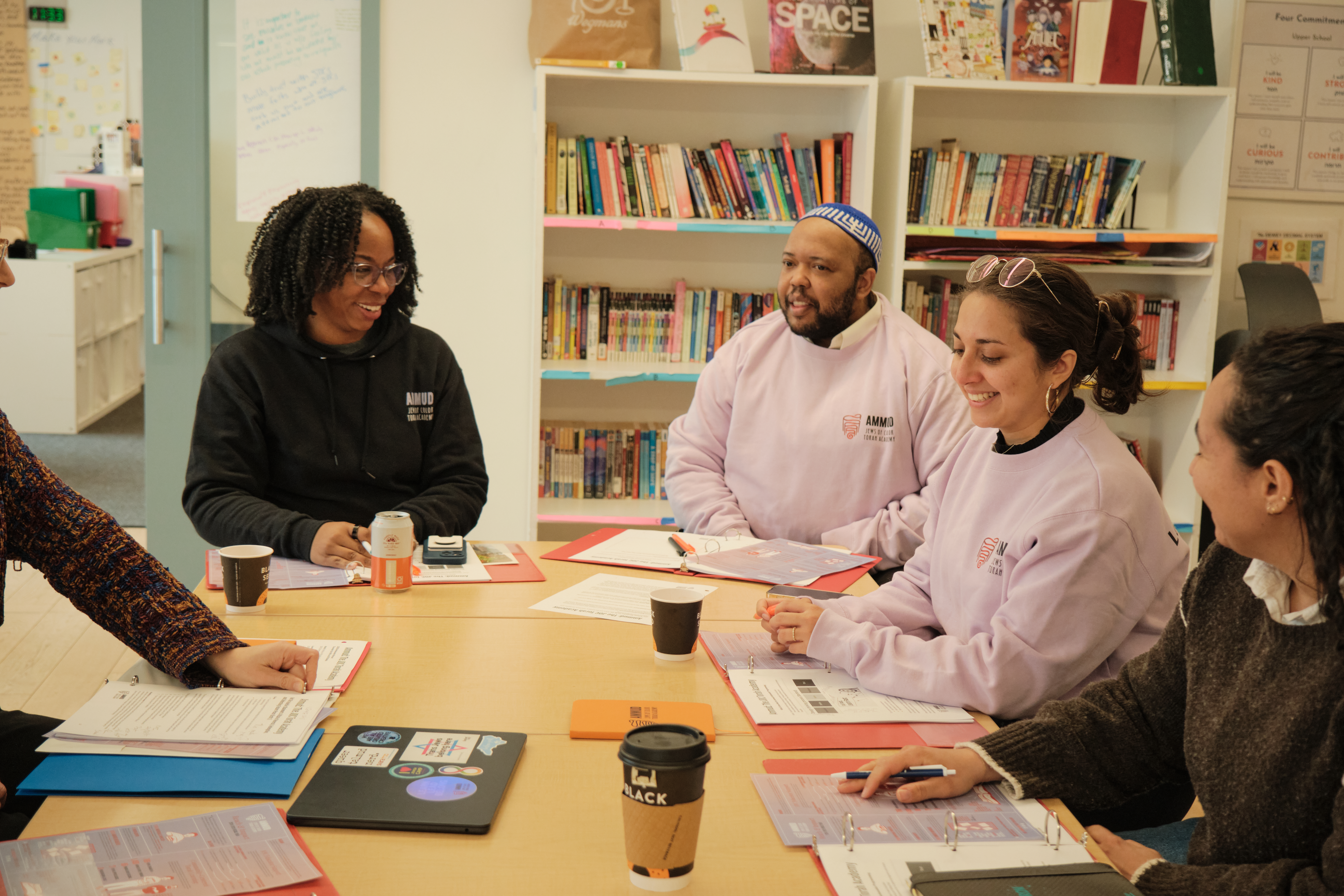
That growth reflects more than the expansion of one organization. It points to a broader shift in the Jewish community: a growing recognition of the experiences and leadership of Jews of Color, and an increasing investment in the people and organizations working to build a multiracial Jewish future.
“Our growth over the past five years speaks, in part, to the growing care, commitment, and investment among many in the Jewish community toward Jews of Color and multiracial Jews,” says Alexandra Corwin, Ammud’s Executive Director.
Founded in New York City in 2019, Ammud has developed into a national organization serving Jews of Color through Jewish learning, community-building, family programming, and leadership development. Its work includes gatherings for multiracial Jewish families, opportunities for young adults to connect with other Jews of Color, and support for JOC rabbis, rabbinical students, educators, and Jewish nonprofit professionals.
Ammud, with seed funding from JOCI through ongoing support, has developed a distinctive approach to Jewish education that has drawn thousands to its programs and continues to contribute to learning across the wider Jewish community. Ammud’s Culturally Sustaining Torah Methodology is grounded in relationship-building, deep engagement with Jewish texts, social-emotional care, and an appreciation of the experiences and cultural backgrounds people bring into a learning space. This methodology informs how Ammud trains its rabbis, educators, and program leaders.
The goal is to create opportunities for Jews of Color to bring their full cultural and personal experiences into Jewish learning, and to make space for the new interpretations and insights that can emerge as a result.
For participants, that approach can transform what Jewish learning feels like. As Ammud member Maria Isabel describes, “Learning from a Rabbi of Color holds a profoundly special meaning for me. In the broader Jewish community, my personal perspectives on certain topics related to Torah are not always seen or fully understood. Being in a learning community composed of fellow Jews of Color breaks down the barriers of judgment and the potential for misunderstanding, creating a truly sacred and affirming space.”
For Corwin, making space for those perspectives is also an opportunity to enrich Jewish learning more broadly. She explains that the methodology centers “the complex, innovative, and rich ways Jews of color bring our multiple heritages, identities, cultures to our Judaism.” The Torah that emerges from this approach, she says, can offer something meaningful to the wider Jewish community, too. “We really believe that when that happens with Torah, the Jewish wisdom that can grow from it is something that benefits every single Jewish person.”
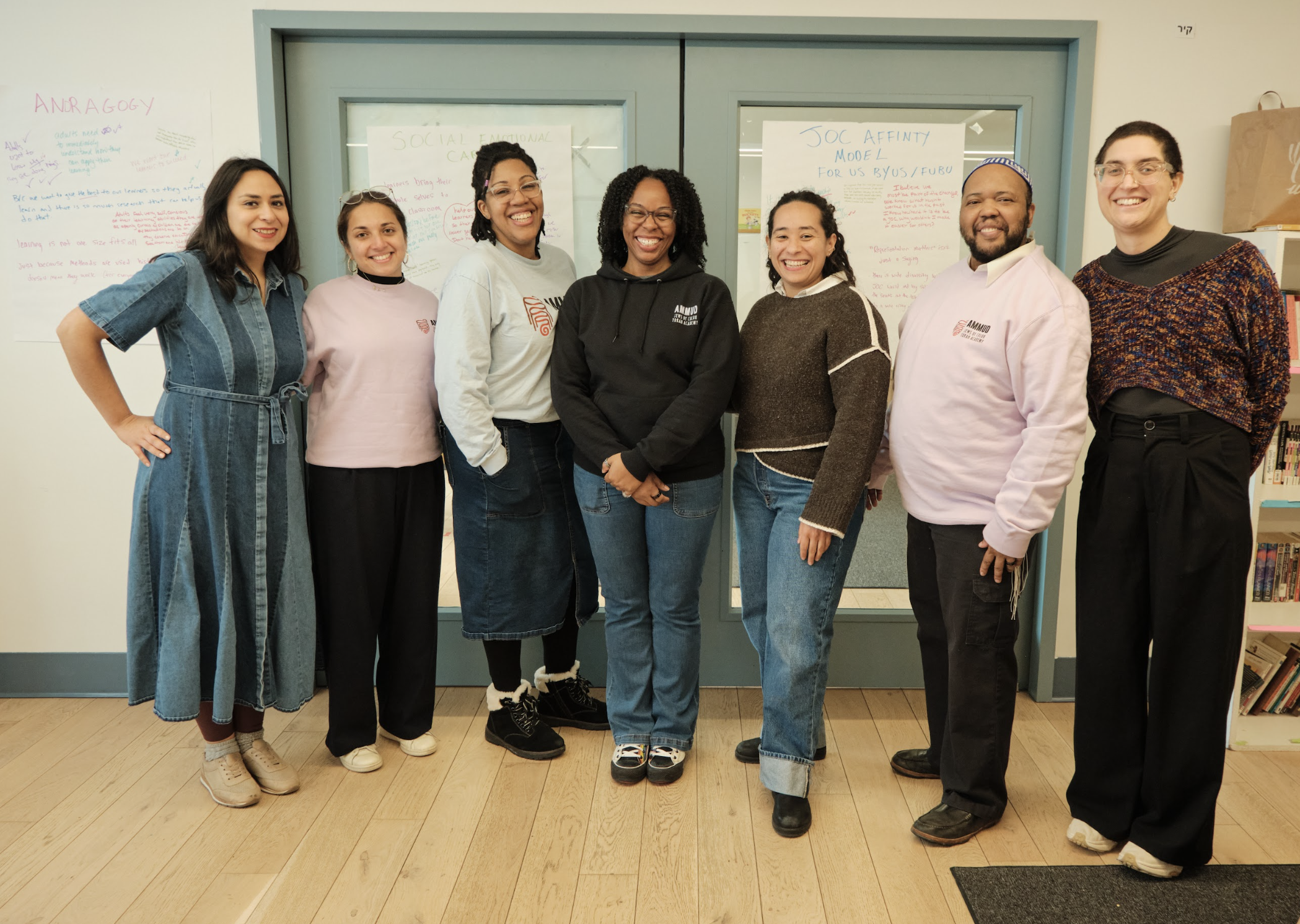
Ammud is increasingly sharing this approach beyond its own programs. Its educators have brought the methodology to rabbinical schools and conferences, while the organization develops guides for holidays and important milestones in Jewish life. With support from Upstart, Ammud is also working to expand the methodology into curriculum and learning opportunities for the wider Jewish community.
This is one example of how investment in organizations serving Jews of Color can contribute to the Jewish community as a whole: by supporting new forms of leadership, scholarship, and learning that might not otherwise have the resources or space to develop.
Ammud’s work also spans generations. Its family programs bring multiracial Jewish families together in several cities, creating opportunities for parents and children to see themselves reflected in Jewish leadership and clergy. Its young adult programming helps participants build friendships and connections that can extend into other Jewish spaces. And its educator and rabbinic programs offer mentorship, professional development, and leadership pathways for Jews of Color pursuing careers in Jewish life.
Corwin sees these programs as part of a larger purpose. Ammud can offer an affinity space where Jews of Color find connection and support, while also helping participants build the confidence and relationships to lead in their broader Jewish communities. The organization’s role, she emphasizes, is not to be the only Jewish community for its members, but to strengthen their ability to participate in and shape Jewish life more broadly.
The growth of Ammud is one story within a field that continues to develop. It reflects the contributions of Jews of Color building organizations, creating new educational approaches, supporting emerging leaders, and cultivating communities where multiracial Jewish life is understood as an integral part of the Jewish present and future.
It also underscores the importance of sustained investment—not only in individual programs, but in the organizations, relationships, research, and leadership that allow this work to take root and grow. As Ammud’s experience shows, when organizations led by and serving Jews of Color have the resources and support to develop their visions, the impact can reach well beyond their own membership, enriching Jewish learning and strengthening all of us.
