
During Rabbi Angela Buchdahl’s recent visit to San Francisco, the Jews of Color Initiative had the opportunity to engage in a thoughtful conversation with her about leadership, belonging, and the lived realities shaping Jewish life today. Taking place alongside a gathering of the JoCI’s Bay Area Pro Network and her public book talk, the exchange explored how personal experience informs communal leadership, and how Jewish spaces can better support people in bringing their whole selves into community.
Rabbi Buchdahl, the nationally renowned rabbi of Central Synagogue in New York, is currently touring the country with her best-selling memoir, Heart of a Stranger: An Unlikely Rabbi’s Story of Faith, Identity, and Belonging. On December 3, 2025, members of the Bay Area Pro Network joined hundreds of attendees at Temple Emanu-El to hear her speak, grounding an evening of reflection and connection.
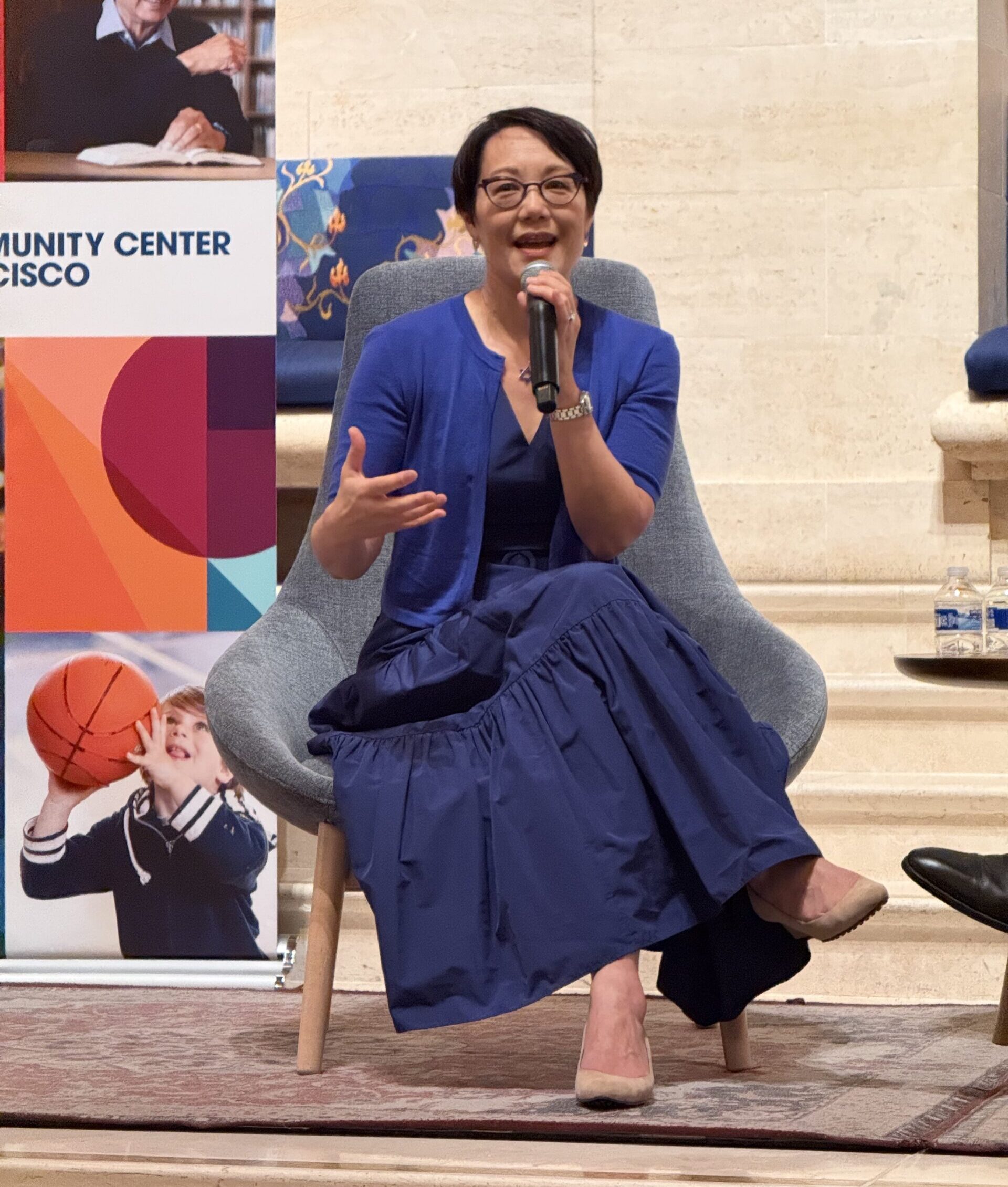
Growing up in Tacoma, Washington, Rabbi Buchdahl didn’t know other Jews of Color and didn’t see Jewish leaders who looked like her. Still, early experiences planted important seeds. “As a youngster interested in spiritual questions, I had a very positive experience in my hometown synagogue, and the wonderful rabbi there made the first suggestion that I become a rabbi when I was a Bat Mitzvah,” she recalled. “Of course I rejected that idea immediately.”
A few years later, another experience shifted everything. “As a teenager, the Bronfman Youth Fellowship in Israel was a pivotal moment, where I felt that the life of a rabbi sounded like a dream job.” By 16, she knew she wanted to pursue the rabbinate—a calling affirmed by subsequent Jewish experiences.
Looking back, she emphasizes the mentors who made her path possible. “These ‘angels’, as I call them, include rabbis and Jewish educators and camp counselors who mentored and supported me, who gave me opportunities and said ‘You can do this!’ They empowered me to find my voice. I’m not sure that we fully appreciate the impact of someone just seeing us and saying ‘you belong, you can do this, you can lead.’” For Rabbi Buchdahl, such affirmation was especially powerful because leadership felt distant without visible role models.
Reflecting on her book tour, Rabbi Buchdahl noted a striking evolution in Jewish community infrastructure—one that contrasts sharply with her own experience of near invisibility. “There was simply zero recognition of this category of JoC,” she said. One example came during a stop at Yale University: “They built their Jewish-Asian Shabbat event around my book talk at Yale. Hillel provided funding to bring students from over 15 campuses. They had a record number of students come to Shabbat dinner—over 500, not all Asian.”
“For me especially, but also for all of us there, to see a critical mass of Jewish Asians at Shabbat dinner, it was simply something I couldn’t have imagined when I was a kid,” she added.
That sense of visibility—of no longer being alone—echoes what JoCI consistently hears from leaders and community members today. “I would have loved a gathering like this periodically just to feel like you weren’t completely by yourself, and that you were connected,” Rabbi Buchdahl reflected. Moments like these demonstrate how intentional investment can create spaces where connection is actively cultivated, and future generations can be called to lead.
Like many Jews of Color, Rabbi Buchdahl regards JoCI’s landmark Beyond the Count study as pivotal. “In and of itself, [Beyond the Count] gave substance to this community,” she said. She recalls first reading the report: “It was astonishing, it was a wakeup call. The numbers show that 12-15 percent of American Jews are Jews of Color, yet we know that’s not what we’re seeing in our Jewish institutional life…I realized that my experience or those of my JoC congregants were only the experiences of people strong enough to come back into our spaces after they were marginalized,” she explained.
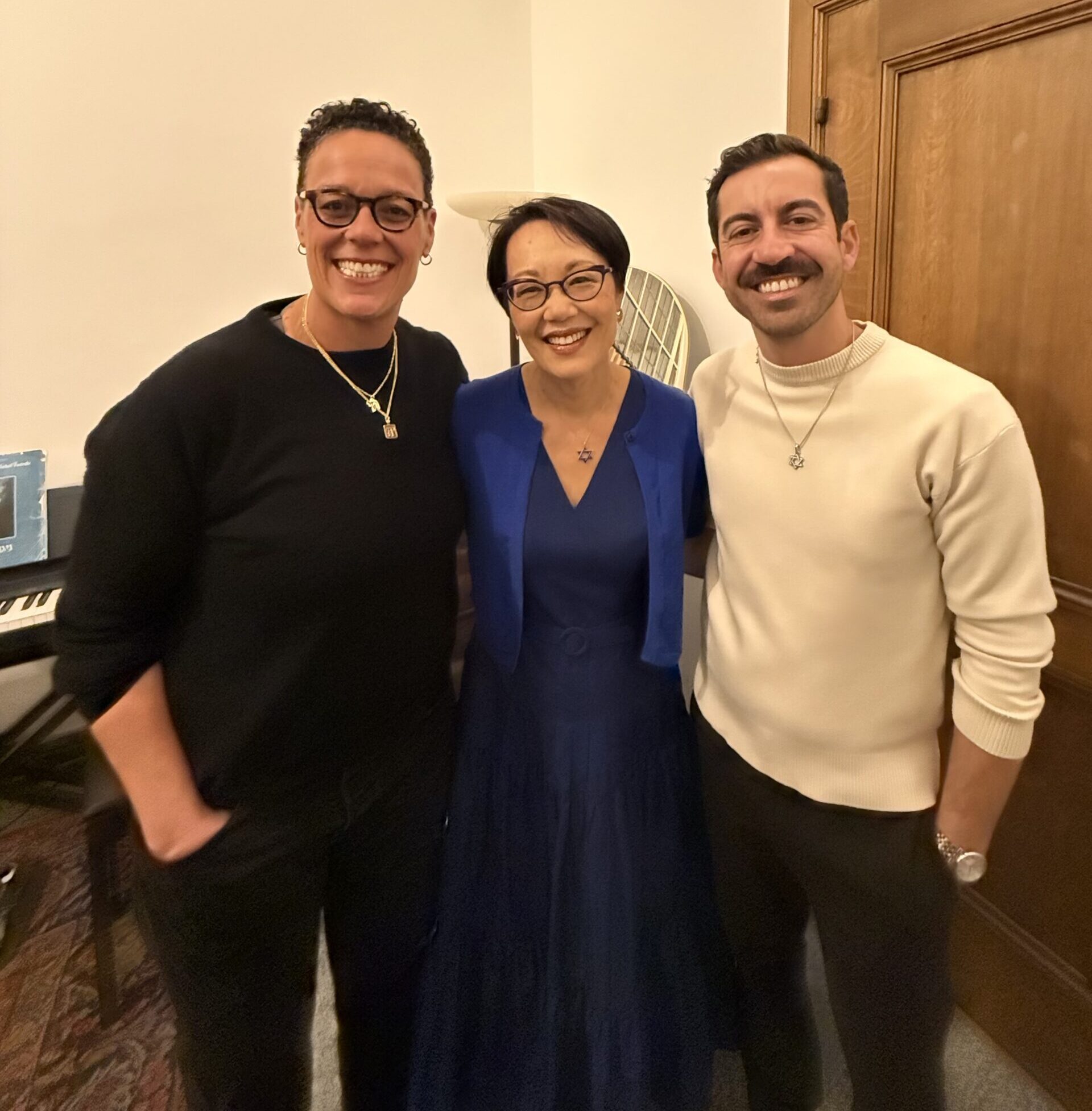
The racial reckoning of 2020 prompted her to confront these dynamics directly. Initially preparing a sermon about race in America, she realized that the experiences of Jews of Color required focused attention within the Jewish community first: “This is a reckoning that we have to have in our Jewish community first; then it’s a muscle we can exercise for the nation as well.”
“That sermon was really the first time I had talked about the racism I experienced in the Jewish community, and the JoCI survey gave me the data behind the anecdotal evidence from my own personal experience.”
For many Jews of Color, JoCI’s research illuminated a truth often experienced in isolation. “For many years, a lot of JoC thought we were the only ones, the unicorn, the outlier. That’s why the data was so powerful. There’s so many more of us out there than people know. And we don’t even know it because we’re not always in traditional Jewish spaces.” She continued, “The JoCI’s work has been really important for consciousness raising, identity building, and communal power. You can’t organize until you have leadership and data. The JoCI is building the infrastructure for a different kind of empowerment for the JoC community.”
Rabbi Buchdahl takes pride in helping people feel seen, extending beyond Jews of Color to anyone who has felt on the margins. “An Ashkenazi Jew, for whatever reason, can also feel like an outsider. I want to talk about it openly and let people know it’s ok to feel that way; maybe even embracing that otherness is something that helps us be incredibly strong community members because we have a different sense of empathy.”
This idea of embracing otherness informs her book and her approach to leadership. While advocating for unity in facing communal challenges, she encourages embracing the community’s inherent diversity: “When we came out of Egypt as a nation of Israel, as Am Yisrael, we were an erev rav, a mixed multitude. It’s so important for us to embrace this.”
Her vision extends beyond ethnicity or culture to include diverse ideologies, political perspectives, and approaches to Israel. “There can be a plurality of those voices, and we can accept that we are a mixed multitude and not see that as the downfall of us, but, rather, that this is who we’ve always been. There are so many different flavors of being Jewish, and we need all of them. This is a strength and it’s to be celebrated.”
